

Class 7 electric vans can now include heavier zero-emission goods vehicles following an important change to MOT testing rules.
From 1 June 2026, zero-emission goods vehicles with a design gross weight between 3,501kg and 4,250kg are tested under the Class 7 MOT scheme rather than the heavy vehicle testing regime. Their first MOT is also now due three years after first registration.
The change gives operators greater choice over where these vehicles can be tested, but it also raises an important question for MOT Test Stations: is your existing Class 7 equipment suitable for these heavier vehicles?
As more electric commercial vehicles enter service, MOT Managers should review their facilities, equipment and authorisation before accepting these vehicles for test.
What Has Changed?
Historically, zero-emission goods vehicles weighing more than 3,500kg fell within the heavy vehicle testing regime. This meant a first test after one year, testing through the heavy vehicle testing network and different testing requirements.
From 1 June 2026, zero-emission goods vehicles between 3,501kg and 4,250kg DGW are instead treated as Class 7 vehicles for MOT purposes.
For these Class 7 electric vans:
- the first MOT is due three years after first registration
- testing takes place under the Class 7 MOT scheme
- operators have access to the wider network of Class 7 MOT Test Stations
The change recognises that battery weight can push an electric van above the traditional 3.5-tonne threshold even though it may be broadly comparable in use to a conventional van.
Which Vehicles Are Affected?
The change applies specifically to:
- zero-emission goods vehicles
- vehicles with a DGW between 3,501kg and 4,250kg inclusive
This includes zero-emission panel vans, flatbeds, tippers and box vans. Hybrid vehicles are not included.
These heavier Class 7 electric vans are defined in the MOT inspection manual as category N2 zero-emission vehicles.
Not Every MOT Test Station Can Test These Vehicles
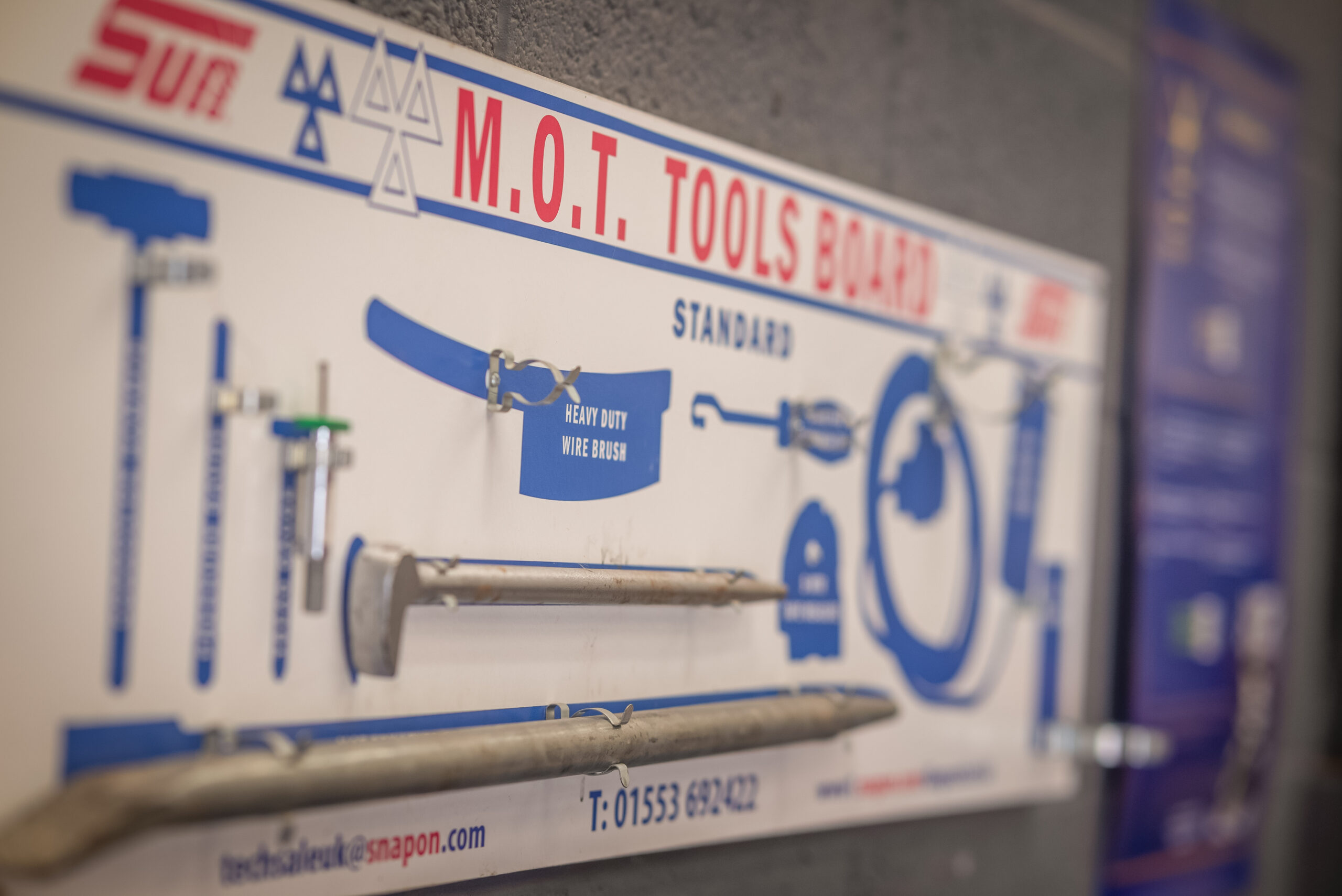
One of the most important points for MOT Test Stations is that the change in testing classification does not remove the physical realities of testing a vehicle weighing up to 4,250kg.
Although these vehicles now fall under the Class 7 MOT scheme, some existing Class 7 equipment may not be suitable or have sufficient Safe Working Load (SWL) to safely accommodate them.
Before accepting these vehicles for test, stations should review:
- Lift or inspection pit capacity
- Brake tester weight limits
- Play detector capabilities
- Jacking equipment
- Axle stands and lifting equipment
- Workshop access and manoeuvrability
- Safe working procedures
MOT Managers should be satisfied that all equipment is suitable for the vehicle’s weight and dimensions and that testing can be carried out safely and effectively.
Authorisation Requirements Remain
It is also important to remember that this change does not automatically allow every MOT Test Station to test these vehicles.
Only MOT Test Stations authorised to carry out Class 7 testing can test these vehicles under the new arrangements.
Stations authorised for Class 4 testing only cannot test these vehicles unless they obtain the appropriate Class 7 authorisation from DVSA.
Can Your MOT Station Test Class 7 Electric Vans Up to 4,250kg?
Before accepting one for test, consider the following:
✅ Are you authorised for Class 7 testing?
✅ Is your brake tester rated for the vehicle weight?
✅ Are your lifts, jacks and axle stands suitable?
✅ Can your inspection area safely accommodate the vehicle dimensions?
✅ Have you considered the potential impact of higher EV axle loads?
✅ Are your technicians aware of any additional safety considerations?
A proactive review now could help prevent safety concerns, equipment issues and compliance problems later.
What Does This Mean for the Industry?
For operators, the change should make testing simpler, more accessible and potentially less expensive.
For MOT Test Stations, it may also create additional testing opportunities as more electric commercial vehicles enter service.
However, stations should avoid assuming that because these vehicles now fall within the Class 7 MOT scheme, existing facilities are automatically suitable. The weight and axle load characteristics of some electric vans can differ significantly from traditional Class 7 vehicles, making equipment suitability checks essential.
Pro-Tech Insight: Don’t Assume Your Existing Class 7 Equipment Is Suitable
One of the biggest misconceptions surrounding this change is that because these vehicles are now tested under the Class 7 MOT scheme, any Class 7 MOT Test Station can automatically accommodate them.
While a station may hold Class 7 authorisation, operators should carefully review the Safe Working Load (SWL) and manufacturer specifications of all testing equipment before accepting a 4,250kg electric van for test.
Electric vehicles carry significant battery weight, which can result in substantially higher axle loads than many traditional Class 7 vehicles.
Particular attention should be paid to:
- ATL brake tester capacities
- Vehicle lift SWL ratings
- Inspection pits and pit jacks
- Axle stands and lifting equipment
- Play detectors and associated equipment
- Workshop access, manoeuvrability and bay dimensions
Failure to ensure equipment suitability could create safety risks for staff, damage equipment and potentially result in non-compliance with DVSA requirements and wider health and safety obligations.
Is Your MOT Station Ready for Class 7 Electric Vans?
The move of heavier zero-emission goods vehicles into Class 7 MOT testing creates new opportunities for MOT Test Stations, but being authorised for Class 7 doesn’t necessarily mean every station is ready to test every vehicle.
With Class 7 electric vans now including zero-emission goods vehicles up to 4,250kg, it’s worth checking your equipment capacities, workshop space and testing arrangements before one arrives for test.
If you’re unsure whether your existing setup is suitable, Pro-Tech can help you review your MOT operation, identify potential gaps and understand what you may need to address.