

How often should MOT QC checks be carried out? It’s a common question for Authorised Examiners and MOT managers, particularly when trying to make sure their quality management arrangements are both effective and proportionate.
MOT quality control (QC) checks are an important part of an MOT testing station’s quality management arrangements, but there is no single QC frequency that is right for every MOT testing station or every tester.
In this guide, we explain what the current DVSA guidance says about MOT QC checks, what should influence their frequency and when additional quality checks may be appropriate.
What Does DVSA Say About MOT QC Checks?
DVSA requires Authorised Examiners to have an effective system in place to manage the quality of MOT testing at their centre. Quality control checks form part of that wider quality management process, alongside areas such as tester competence and training, procedures, equipment, test quality information and corrective action.
The important point is that DVSA does not prescribe one QC frequency that will be appropriate for every MOT centre and every tester. Quality management arrangements should be proportionate to the operation and take account of the risks identified.
This means QC should not simply become a diary exercise where a check is completed because a particular date has arrived. The purpose is to provide meaningful assurance that MOT tests are being carried out correctly and to identify where additional support, training or monitoring may be required.
So, How Often Should MOT QC Checks Be Carried Out?
There is no one-size-fits-all answer. The frequency of MOT QC checks should be determined by the circumstances of your MOT operation and the level of risk associated with each tester.
An experienced tester with consistently good performance and no identified concerns may require a different level of monitoring from a newly qualified tester, someone returning to testing after a period away, or a tester whose performance information or previous QC checks have highlighted concerns.
Factors you should consider when deciding the appropriate frequency include tester experience and competence, testing volumes, test quality information, previous QC findings, changes in performance and any concerns or trends that have been identified.
Where QC checks identify an unusually high number of failings, the frequency of checks should be increased until you are satisfied that the issues have been addressed and the necessary improvement has been demonstrated.
The key is being able to show that your approach is proportionate, risk-based and actively managed as part of your wider MOT quality management arrangements.
Do MOT QC Checks Have to Be Carried Out Every Two Months?
You may still hear MOT QC checks described as something that should simply be carried out “every two months”. However, treating this as a fixed rule for every tester can miss the purpose of effective quality management.
Your QC arrangements should reflect the circumstances of your MOT centre and the individual tester. Rather than relying solely on a calendar-based approach, you should consider the tester’s experience, performance, test quality information, previous QC findings and any identified areas of risk.
This also means that completing a QC check at a set interval should not automatically be taken as evidence that your quality management arrangements are effective. If concerns are identified, additional monitoring or more frequent QC checks may be appropriate. Equally, your overall approach should be capable of demonstrating why the level of quality assurance you have chosen is suitable for your operation.
The important question is not simply “when was the last QC check?” but “how are we assuring ourselves that MOT testing standards are being maintained?”
Who Should Carry Out an MOT QC Check?
An MOT QC check should be carried out by someone who has the appropriate knowledge, skills and experience to properly assess MOT testing standards.
Being an MOT tester does not automatically mean that someone has the experience or competence required to effectively quality assure another tester. The person carrying out the check needs to understand the relevant testing standards, recognise where procedures have not been followed correctly and be capable of providing meaningful feedback where improvements are required.
If you use an independent provider, it is worth checking the credentials of the person who will actually carry out your QC checks. Consider their MOT testing experience, relevant qualifications, industry background and their understanding of current DVSA requirements.
A good QC check should provide meaningful assurance and an opportunity to improve testing standards, not simply another completed piece of paperwork for the MOT file.
What Should Happen During an MOT QC Check?
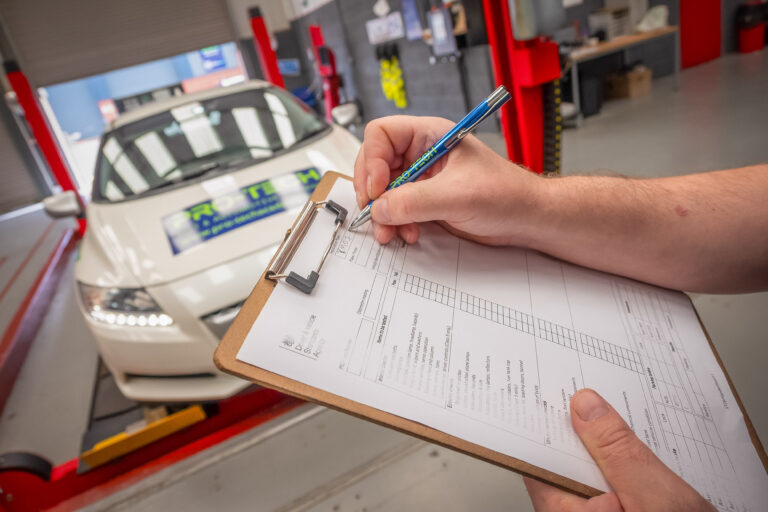
An MOT QC check should provide a meaningful assessment of whether the MOT test is being carried out correctly and in accordance with the required testing standards.
The quality controller may closely observe the tester carrying out all parts of the MOT test, or observe the testing process and carry out a full re-examination of the vehicle to compare the findings.
Any differences, concerns or areas for improvement should be discussed with the tester and resolved before the test result is confirmed. The outcome of the QC check should then be recorded, together with any actions that have been agreed.
Where a concern is identified, the process should not end when the QC record is completed. Appropriate action may include further training or coaching, additional monitoring, reviewing procedures or increasing the frequency of QC checks. There should also be evidence that the action has been followed up and, where appropriate, that the required improvement has been achieved.
The value of a QC check is not in completing the form. The value is in what you learn from it and what you do with that information.
What If I’m the Only MOT Tester at My Garage?
If you are the only MOT tester at your site, you do not automatically need to employ an independent provider to carry out your MOT quality control.
Single-tester sites can manage their own quality assurance, provided they have an effective process in place that meets the requirements of the MOT Testing Guide.
This should include reviewing your own testing standards and performance, considering available test quality information, identifying any areas of concern and keeping appropriate records of the checks undertaken and any actions taken.
Some single-tester sites choose to use an independent provider because they value an objective assessment of their testing standards or want additional assurance that their quality management arrangements are effective. However, this is a choice rather than an automatic requirement simply because there is only one tester at the site.
Whether quality assurance is managed internally or with external support, the important thing is being able to demonstrate that MOT quality is being actively monitored and managed.
MOT QC Checks Are Only Part of Quality Management
MOT QC checks are an important part of quality management, but they should not be treated as the entire quality management process.
Effective MOT quality management should also consider tester performance and competence, test quality information, training, procedures, equipment, identified risks and any corrective action that may be required.
If a QC check or other quality information highlights a concern, the aim should be to understand why it has happened, take appropriate action and then demonstrate that the action taken has been effective.
A well-managed MOT centre should therefore be able to show not only that QC checks are taking place, but that quality is being actively reviewed and that findings are being used to maintain and improve testing standards.
Need help reviewing your wider MOT quality management arrangements? Find out more about our MOT Quality Management & QC Support.
Getting MOT QC Right
There is no single MOT QC schedule that will be right for every testing station or every tester. Effective quality control should be proportionate to your operation, responsive to the risks you identify and form part of your wider quality management arrangements.
The most important thing is that QC checks are meaningful. They should help you understand whether testing standards are being maintained, identify where improvement may be required and provide evidence that appropriate action has been taken where concerns arise.
At Pro-Tech, our MOT consultants are current, live MOT testers with extensive experience of the MOT scheme, supported by significant former DVSA Vehicle Examiner experience within our team. We provide independent QC checks and wider MOT quality management support to testing stations across the UK.
Need Support With MOT Quality Management?
Whether you need an independent MOT QC check, help reviewing your existing quality management arrangements or ongoing support managing MOT standards, our experienced team can help.
Need Support With MOT Quality Management?
Whether you need an independent MOT QC check, help reviewing your existing quality management arrangements or ongoing support managing MOT standards, our experienced team can help.