
ADAS calibration is becoming an increasingly important part of modern vehicle repair and maintenance. As Advanced Driver Assistance Systems become standard across more vehicles, workshops need to understand not only how these systems work, but also when calibration may be required.
Cameras, radar and other sensors are used by systems including autonomous emergency braking, adaptive cruise control, lane assistance and parking systems. If the position or operation of one of these sensors is affected during repair or maintenance, ADAS calibration may be necessary to ensure the system continues to operate as intended.
This means ADAS is no longer something only accident repair centres or specialist workshops need to think about. Windscreen replacement, wheel alignment, suspension work, steering repairs and even the removal of certain body components can all potentially affect ADAS sensors or their calibration.
So why is ADAS calibration important, when might it be required, and what do workshops need to consider before bringing ADAS work in-house?
When Might ADAS Calibration Be Required?
The circumstances that require ADAS calibration can vary between vehicle manufacturers and systems, so technicians should always follow the relevant manufacturer procedures.
Depending on the vehicle, calibration may need to be considered following work such as:
- Windscreen replacement
- Wheel alignment or geometry adjustment
- Suspension or steering repairs
- Camera, radar or sensor replacement
- Bumper removal or replacement
- Accident or body repairs
- Changes that affect vehicle ride height or geometry
Calibration may also be required where diagnostic information, manufacturer procedures or the vehicle itself indicates that an ADAS system needs to be recalibrated.
The important point is that technicians should not assume a system is correctly calibrated simply because no warning light is displayed. The correct repair and calibration procedure should always be determined using appropriate technical information for the vehicle.
What Are the Insurance Industry Requirements for ADAS Calibration?
The UK Insurance Industry Requirements (IIR) for the safe repair of ADAS-equipped vehicles provide a framework for managing vehicles where Advanced Driver Assistance Systems may be affected during repair, servicing or maintenance.
The requirements apply where work involves ADAS sensors, parts that could affect the operation of those sensors, or vehicle geometry. In these circumstances, the repairer should determine whether inspection, realignment or calibration is required and follow the appropriate vehicle manufacturer procedures.
The Insurance Industry Requirements set out expectations including identifying and recording the ADAS fitted to the vehicle, establishing whether the work being carried out could affect an ADAS system, following appropriate technical information and ensuring that any required inspection, realignment or calibration is completed by a currently competent person.
Repairers should also be able to produce verifiable and auditable records showing that the required work has been completed and that affected sensors are functioning within the vehicle manufacturer’s technical specification.
For workshops, this reinforces an important point: ADAS calibration isn’t simply about owning calibration equipment. Appropriate procedures, technical information, technician competence and evidence of the work carried out are all part of delivering ADAS work correctly.
Read the Insurance Industry Requirements for ADAS-equipped vehicles →
Why Accurate ADAS Calibration Matters
When it comes to ADAS calibration, getting it nearly right isn’t good enough. ADAS systems are there to support the driver and, in many cases, intervene in safety-critical situations.
If a camera or radar is incorrectly calibrated, the system may not be seeing the road in quite the way it should.
And when you’re talking about systems controlling or influencing braking, steering and vehicle positioning, ‘nearly right’ isn’t where you want to be.
There’s also a responsibility on the workshop carrying out the work. If you’ve completed a repair that affects an ADAS system, you need to know what the manufacturer requires and be confident that the vehicle is being returned to the customer correctly.
Your Customer Probably Won’t Know – But You Need To
Most customers aren’t going to bring their car in and tell you that the forward-facing camera needs recalibrating after you’ve replaced a component.
That’s not their job.
They expect the garage to know.
They also expect all the safety systems fitted to their vehicle to be working properly when they get it back.
As technicians and workshops, understanding ADAS is becoming part of doing the job properly on modern vehicles.
Buying the Equipment Isn’t the Same as Knowing How to Use It
We see this across the industry with new technology. Buying the kit is one thing. Understanding what you’re doing with it is another.
Good ADAS training should give technicians an understanding of the whole process – not just which buttons to press.
That includes understanding:
- The different ADAS technologies fitted to vehicles
- When calibration is required
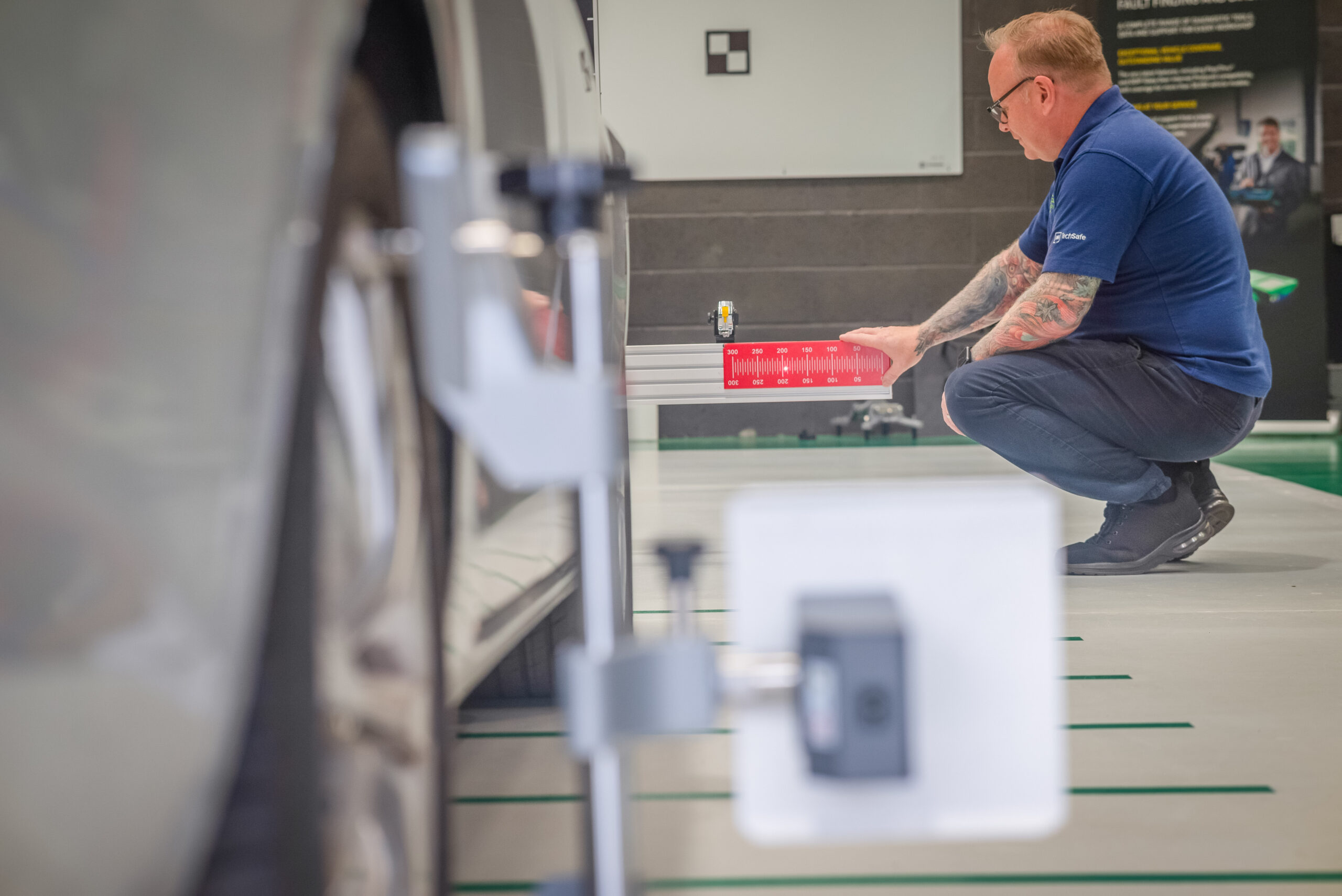
- Static and dynamic calibration
- Vehicle and workshop preparation
- Correct use of calibration equipment
- Manufacturer procedures
- How to confirm and document the calibration
Because when you’re working with safety-critical systems, following the correct process matters.
Is It Time to Bring ADAS Into Your Workshop?
For garage owners and managers, there’s another consideration.
If you’re regularly sending ADAS work elsewhere, is there a point where it makes sense to develop that capability within your own workshop?
Bringing calibration in-house isn’t going to be right for every business. You need the equipment, the right environment and, importantly, technicians who are properly trained.
But as the number of ADAS-equipped vehicles continues to increase, it’s a conversation more workshops should be having.
For technicians, it’s also another valuable skill to have as the job continues to change.
How Pro-Tech Can Help
At Pro-Tech, we offer ADAS training for different levels of experience – whether you need a better understanding of the technology, want to carry out calibrations, or are looking to develop more advanced diagnostic skills.
Our current ADAS training includes:
- Level 1 Award in ADAS Awareness – a foundation-level introduction to how ADAS works and why it matters.
- Level 2 Technical Specialist in ADAS Calibration (Award) – developing the practical skills needed to calibrate ADAS systems safely and accurately.
- Level 3 Technical Specialist in Diagnosing, Rectifying and Recalibrating ADAS Components (Award) – for technicians looking to develop more advanced fault-finding, repair and recalibration skills.
- AOM012 4-Wheel Alignment Accreditation – demonstrating competence in four-wheel alignment and correcting vehicle geometry.
- AOM230 ADAS Calibration Technician Accreditation – demonstrating competence in carrying out ADAS calibration procedures.
Whichever level you’re currently at, the aim is the same: to give you practical knowledge and skills that you can take back into the workshop and actually use.
You can view all of our ADAS courses and find the right training for you here.
Or, if you’re not sure which course you need, get in touch and we’ll talk you through the options.
Call: 01283 734427
Email: info@pro-techacademy.co.uk
Visit: www.pro-techacademy.co.uk
Skill up. Stand out. Succeed.